Loading...
Loading...
Loading...
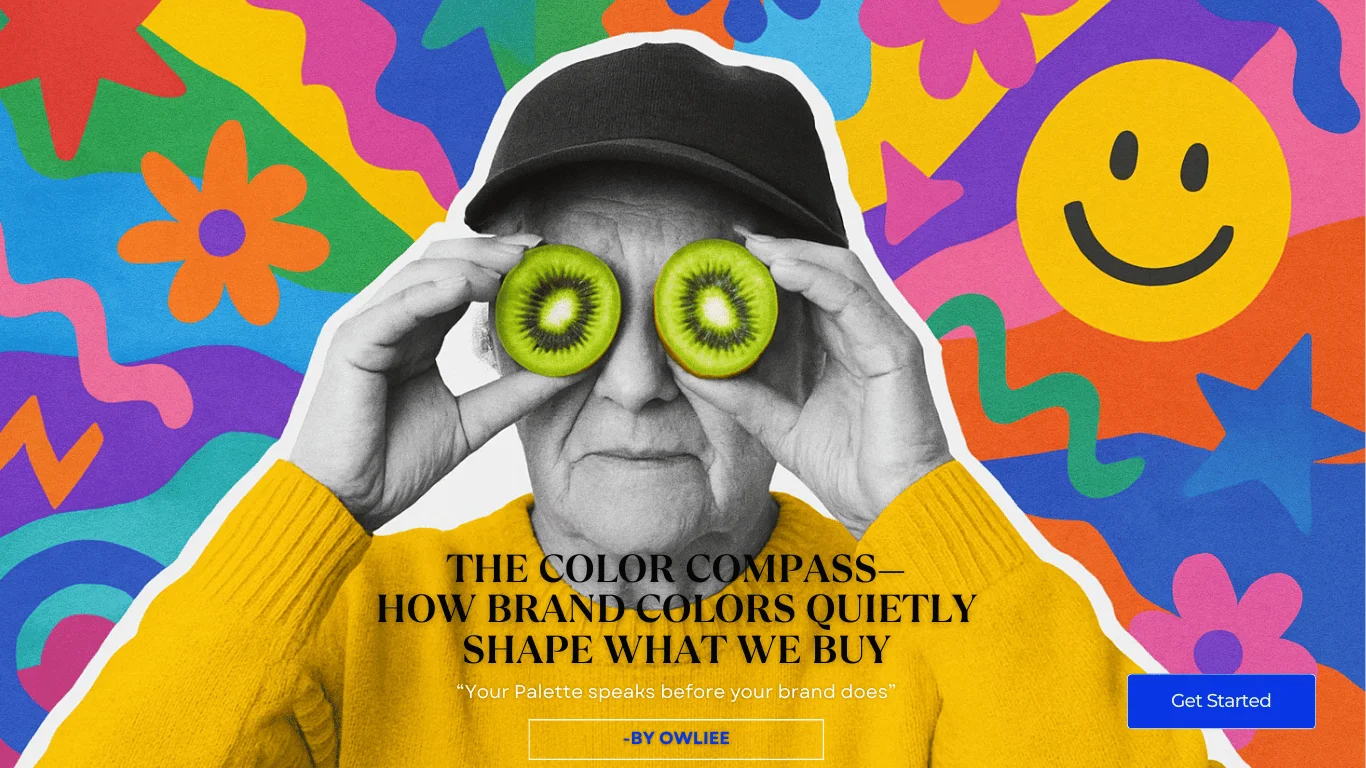
Discover the psychology behind colors in branding and how the right palette can guide emotions, influence decisions, and inspire lasting loyalty.
Before you read another word, look around you. The mug on your desk. The logo glowing on your phone. The clothes you chose this morning.
Chances are, you didn't consciously decide on their colors — yet those colors shaped your mood, confidence, and even your willingness to spend.
Color is the silent salesman of branding. It whispers before your brand speaks, guiding decisions in ways most people never notice. In a digital world overflowing with visuals, your brand colors aren't just decoration — they're persuasion in disguise.
Brand colors are more than an aesthetic choice; they're a coded language.
The right palette can make your brand feel trustworthy, luxurious, youthful, or urgent — without a single word. The wrong palette can send the opposite message, eroding trust before a customer even hears your story.
At OWLIEE, we see color not as a design afterthought, but as a strategic navigation tool — a compass guiding brand perception and buying behavior. We call this The Color Compass™.
Every color carries cultural memory. Blue signals trust in finance because of centuries-old associations with stability. Red ignites appetite in food branding because it triggers primal energy.
But here's the twist — color psychology is never universal. In Japan, white can mean mourning; in Western culture, purity.
Key takeaway: Your palette must align not only with psychology but with your audience's cultural context. A global brand's red might feel bold in one market and aggressive in another.
Color reaches the limbic system — the emotional brain — before logic kicks in.
That's why Tiffany's blue box doesn't just contain jewelry; it contains anticipation. Why Coca-Cola red feels like a celebration, not just a soda.
The first impression isn't just "Do I like this?" but "Do I feel this?"
When chosen strategically, brand colors make a customer feel home, energized, or exclusive — feelings that lead to loyalty.
We developed The Color Compass™ to help brands choose palettes that navigate perception and action. It has four cardinal points:
Your brand's "true north" might combine two points — for example, Apple blends West (clarity) with North (trust) for its minimalist yet credible appeal.
A palette is powerful only if it's lived across every touchpoint:
Think IKEA: their yellow and blue is not just in the logo — it's in signage, store uniforms, catalog layouts, and even the shopping bags you carry home. That's not coincidence; it's brand color discipline.
Trends shift. A green once associated with "eco" might now feel dated. A neon pink can go from edgy to cliché in a few years.
Savvy brands periodically audit their palette without losing recognition.
This is how Instagram refreshed its gradient logo — modernizing without abandoning its core vibrance.
When Spotify shifted to its bold neon-green-on-black identity, it didn't just choose a color. It claimed a territory: the place where music meets modern tech. The shade was intentionally tuned to stand out on a crowded phone screen — not just to be beautiful, but to be found.
Your brand colors are your first impression and your lasting impression. They can invite trust, spark desire, and even nudge someone to choose you over a competitor without them knowing why.
If your brand's colors are just "the ones you liked," you might be leaving growth on the table. At OWLIEE, we help brands find their Color Compass™ — the palette that moves not just eyes, but hearts and decisions.
→ Let's map your brand's true colors together.
This article represents our ongoing research into color psychology and its impact on brand perception and consumer behavior.
Strategy-made-visible. Let’s craft your next chapter.